B2B
B2B
B2B
Web App
Web App
Web App
0→1
0→1
0→1
INTEL X
INTEL X
INTEL X
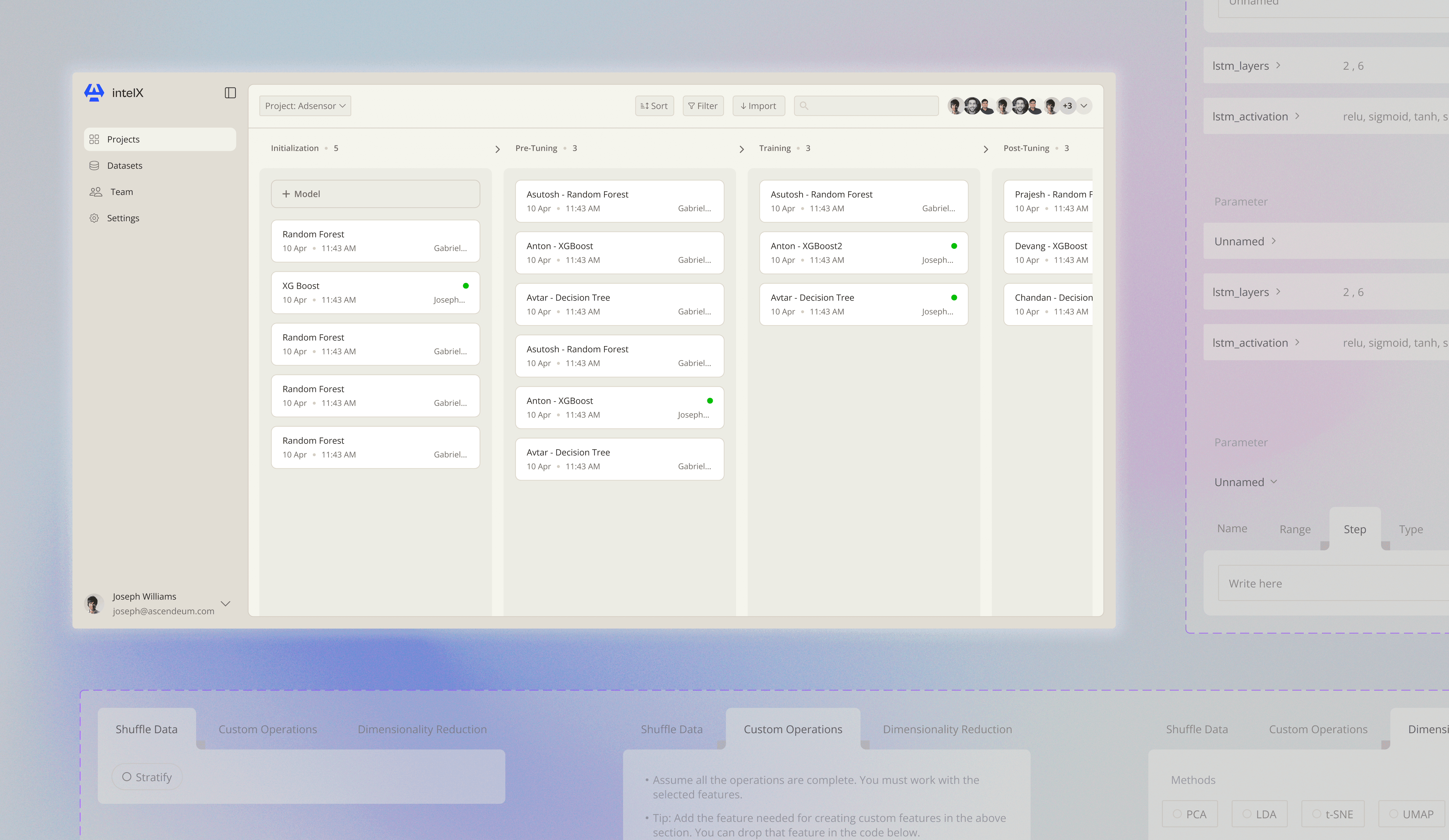
IntelX is an end-to-end ML platform concept designed to
IntelX is an end-to-end ML platform concept designed to
take models from dataset setup to deployment and monitoring in one guided workflow. It helps teams ship and improve prediction models faster by reducing tool-switching and making progress visible.
take models from dataset setup to deployment and monitoring in one guided workflow. It helps teams ship and improve prediction models faster by reducing tool-switching and making progress visible.
MachineLab is an end-to-end ML platform concept designed to take models from dataset setup to deployment and monitoring in one guided workflow. It helps teams ship and improve prediction models faster by reducing tool-switching and making progress visible.
Space
Space
Machine Learning
Machine Learning
Role
Role
Product Designer
Product Designer
Users
Users
Data Scientists
ML Engineers
Data Scientists
ML Engineers
Team
Team
1 Designers
2 Front-end &
1 Back-end developer
1 Project Manager
1 Designers
2 Front-end &
1 Back-end developer
1 Project Manager
Problem
Problem
Problem
Ascendeum’s ML work was slowed by fragmented tools and handoffs across data prep, training, deployment, and monitoring, creating delays in shipping models that impact ad performance.
Teams spent disproportionate time coordinating workflows instead of improving models that drive client ROI.
Ascendeum’s ML work was slowed by fragmented tools and handoffs across data prep, training, deployment, and monitoring, creating delays in shipping models that impact ad performance.
Teams spent disproportionate time coordinating workflows instead of improving models that drive client ROI.
Business goals
Business goals
Business goals
Reduce time lost in fragmented ML workflows by bringing data prep, training, deployment, and monitoring into one structured system.
Improve model shipping speed, governance, and cross-team visibility so Ascendeum can deliver stronger client ROI through faster ML iteration.
Reduce time lost in fragmented ML workflows by bringing data prep, training, deployment, and monitoring into one structured system.
Improve model shipping speed, governance, and cross-team visibility so Ascendeum can deliver stronger client ROI through faster ML iteration.
User goals
User goals
User goals
Help data scientists and ML engineers move models through each stage with less tool switching, clearer ownership, and fewer repetitive setup tasks.
Make the ML lifecycle easier to follow through a stage-based workflow that supports both beginners and advanced users with the right level of guidance and control.
Help data scientists and ML engineers move models through each stage with less tool switching, clearer ownership, and fewer repetitive setup tasks.
Make the ML lifecycle easier to follow through a stage-based workflow that supports both beginners and advanced users with the right level of guidance and control.
Design Approach
Design Approach
Design Approach
I used a research-led design approach-interviewing Ascendeum data scientists/admins and shadowing real ML workflows—to map a consistent AdTech model lifecycle and identify where time was lost.
Then designed a stage-based “Model Journey” where models move as cards through each step with progressive disclosure, making the flow beginner-friendly while keeping expert controls for tuning, deployment, and monitoring.
I used a research-led design approach-interviewing Ascendeum data scientists/admins and shadowing real ML workflows—to map a consistent AdTech model lifecycle and identify where time was lost.
Then designed a stage-based “Model Journey” where models move as cards through each step with progressive disclosure, making the flow beginner-friendly while keeping expert controls for tuning, deployment, and monitoring.
Impact
Impact
Impact
1) Lowered experiment-to-deployment operational cost by 25–35% by reducing reliance on multiple tools and manual handoffs.
2) Reduced tooling and coordination overhead by 30-40% through platform consolidation.
3) Experiment setup time reduced from 45-90 min to 27-45min per run with a unified workflow and reusable configuration.
4) Data movement overhead reduced from 4-6 hrs/week to less than 3-4hrs/week by reducing rework and repeated transfers.
1) Lowered experiment-to-deployment operational cost by 25–35% by reducing reliance on multiple tools and manual handoffs.
2) Reduced tooling and coordination overhead by 30-40% through platform consolidation.
3) Experiment setup time reduced from 45-90 min to 27-45min per run with a unified workflow and reusable configuration.
4) Data movement overhead reduced from 4-6 hrs/week to less than 3-4hrs/week by reducing rework and repeated transfers.
PM Handoff
PM Handoff
PM Handoff
Success Criteria
Success Criteria
Deployment Time : Reduce model deployment from months to days or hours.
User Adoption : Beginners can build and deploy models without support.
Cross-team Efficiency : Reduce handoff time between data scientists and ML engineers by 50% through shared workflows.
Secondary Research
Secondary Research
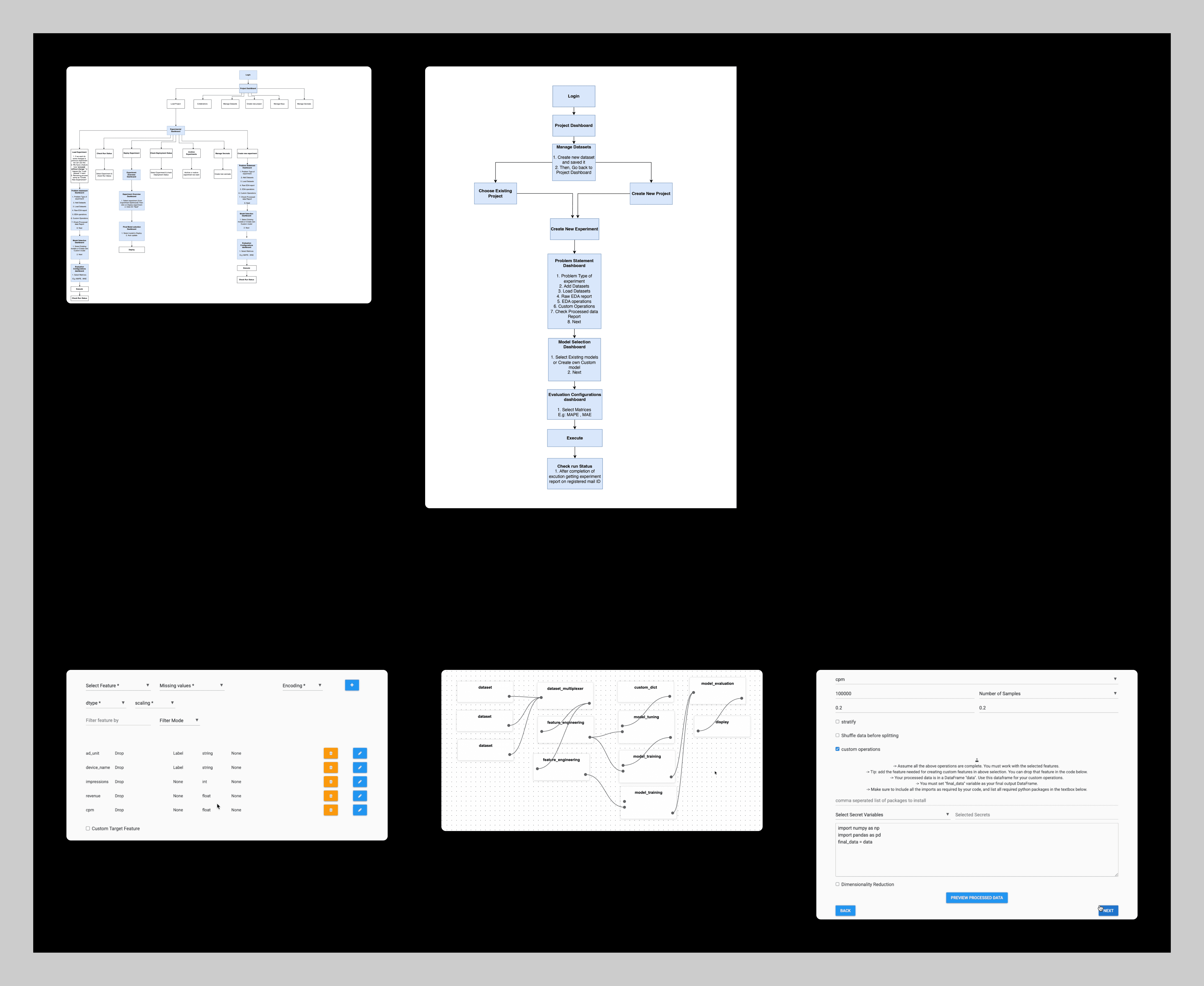
Conducted lightweight AI-assisted secondary research to quickly understand the machine learning space, its lifecycle, and the key tools and roles involved.
Used this to build foundational context on how machine learning supports Adtech use cases such as prediction, optimization, and model deployment before moving into user interviews.
Primary Research by Interview
Primary Research by Interview
Primary Research by Interview
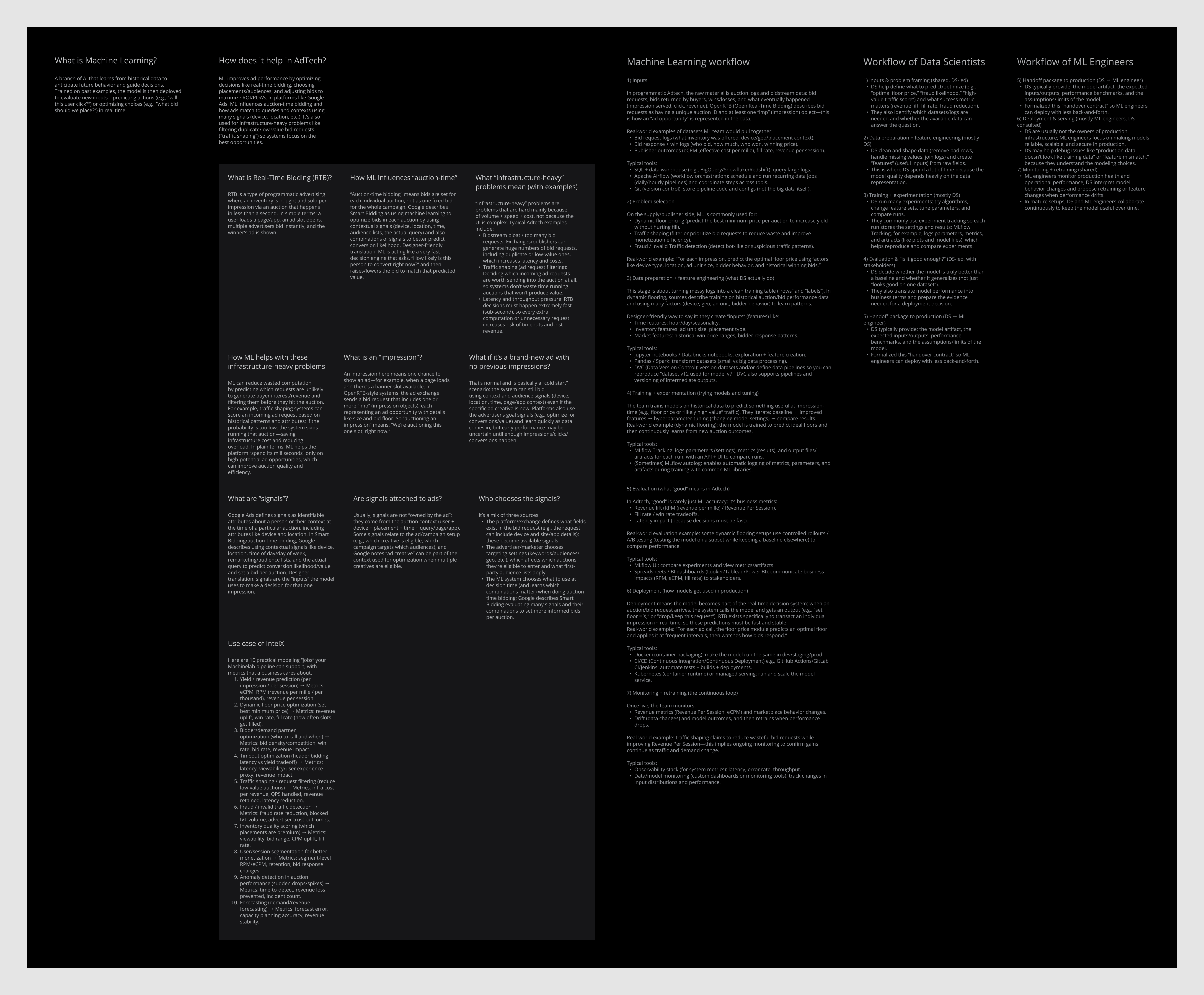
Critical Pain Points
Critical Pain Points
Efficiency bottlenecks and lack of advanced workflow support.
Visibility and governance challenges across team workflows.
Approx 4-6 hrs/week wasted on data movement.
Approx 45–90 minutes spent just recreating setup (datasets, splits, feature steps, metrics) before training.
Key Research Insights
Key Research Insights
Need for stage-based workflow that mirrors natural ML progression.
Progressive disclosure strategy essential for serving multiple skill levels.
Built-in sharing, versioning, and knowledge transfer capabilities needed
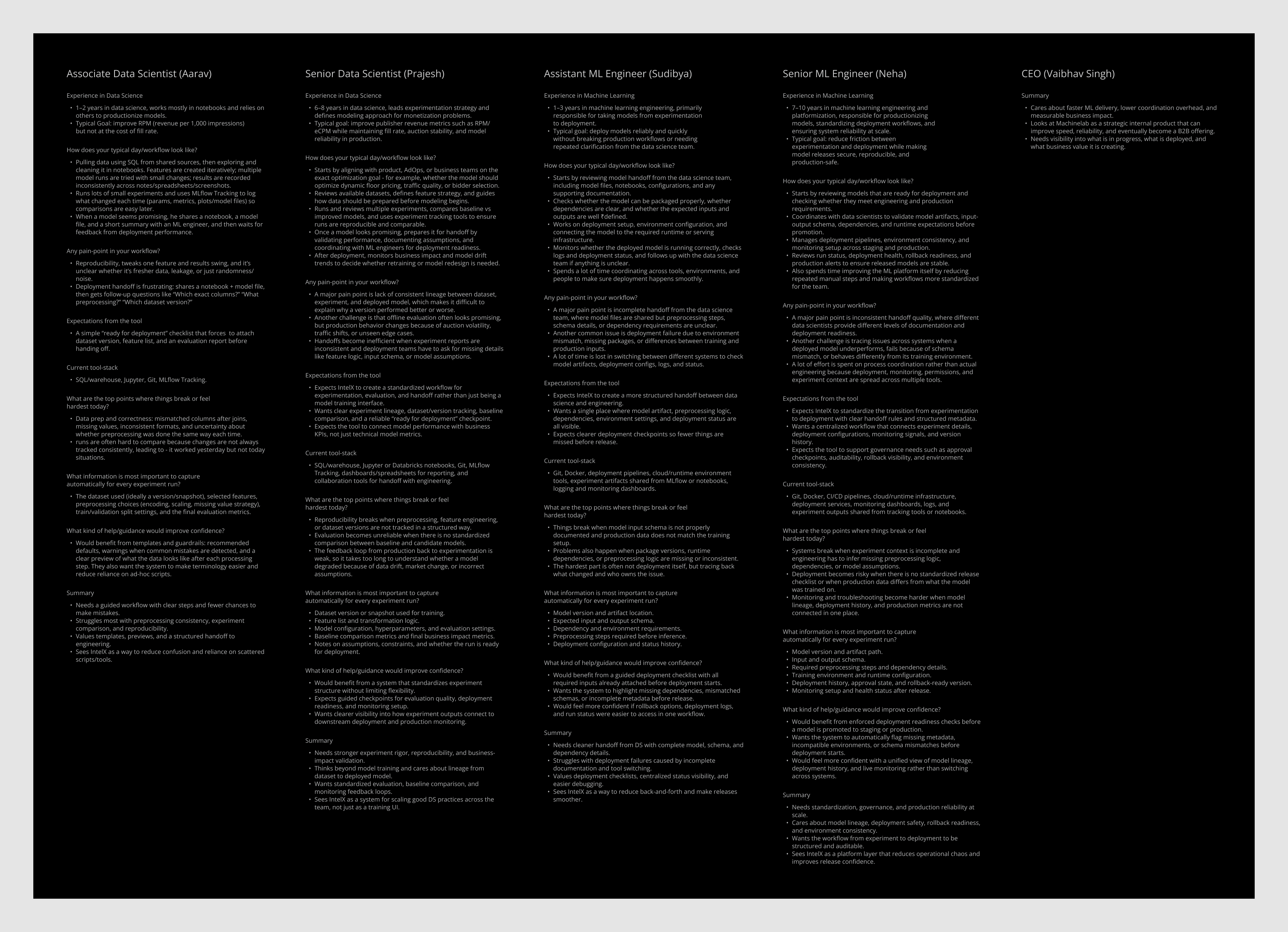
Mapping the Machine Learning Workflow
Mapping the Machine Learning Workflow
Mapping the Machine Learning Workflow

Stage Based IA
Stage Based IA
Stage Based IA

UI Structure Exploration
UI Structure Exploration
UI Structure Exploration
Swimlane -3 accommodates the required complexity.
Swimlane -3 accommodates the required complexity.
Swimlane -3 accommodates the required complexity.
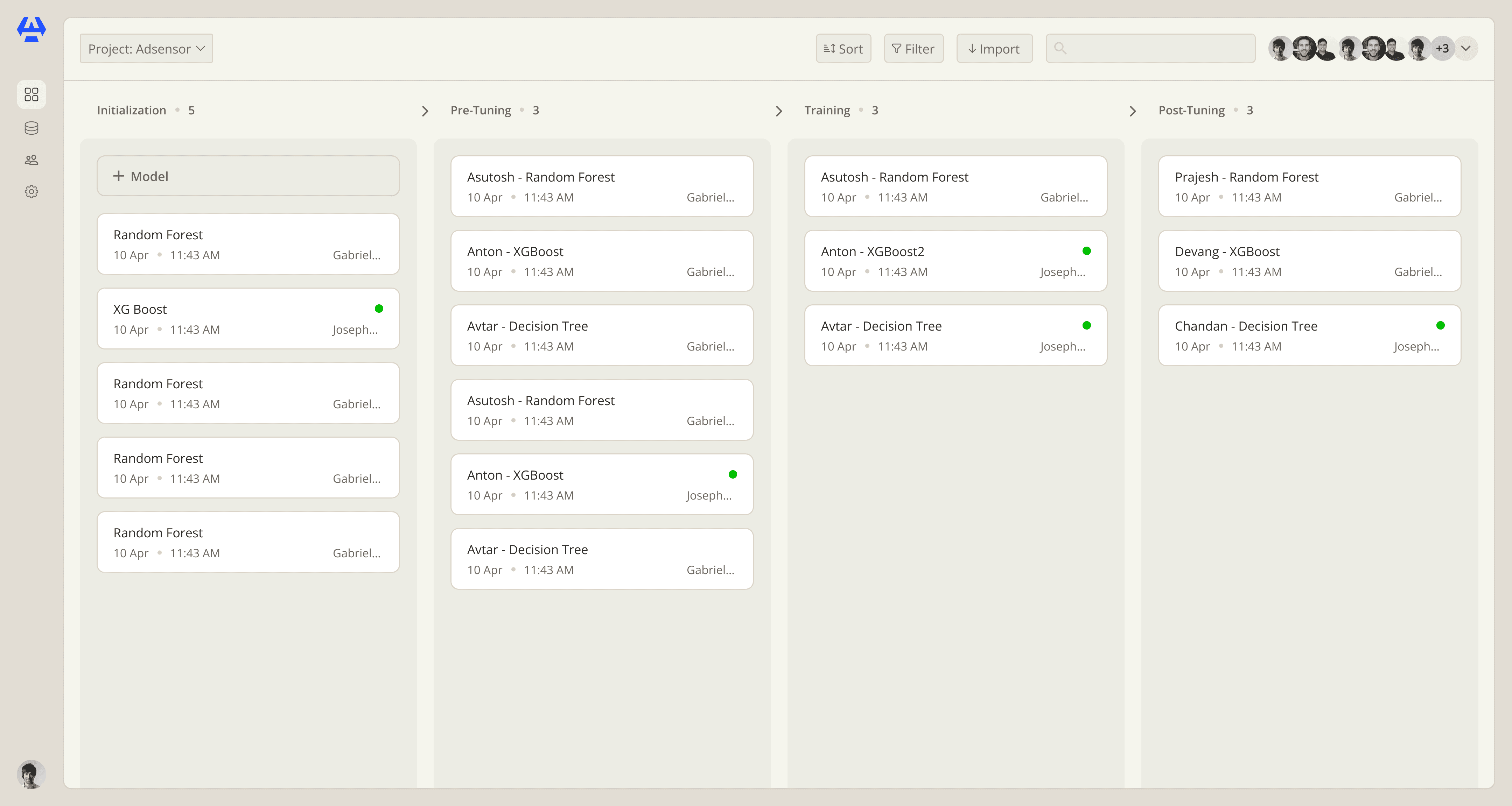
Stage-based visual pipeline.
Stage-based visual pipeline.
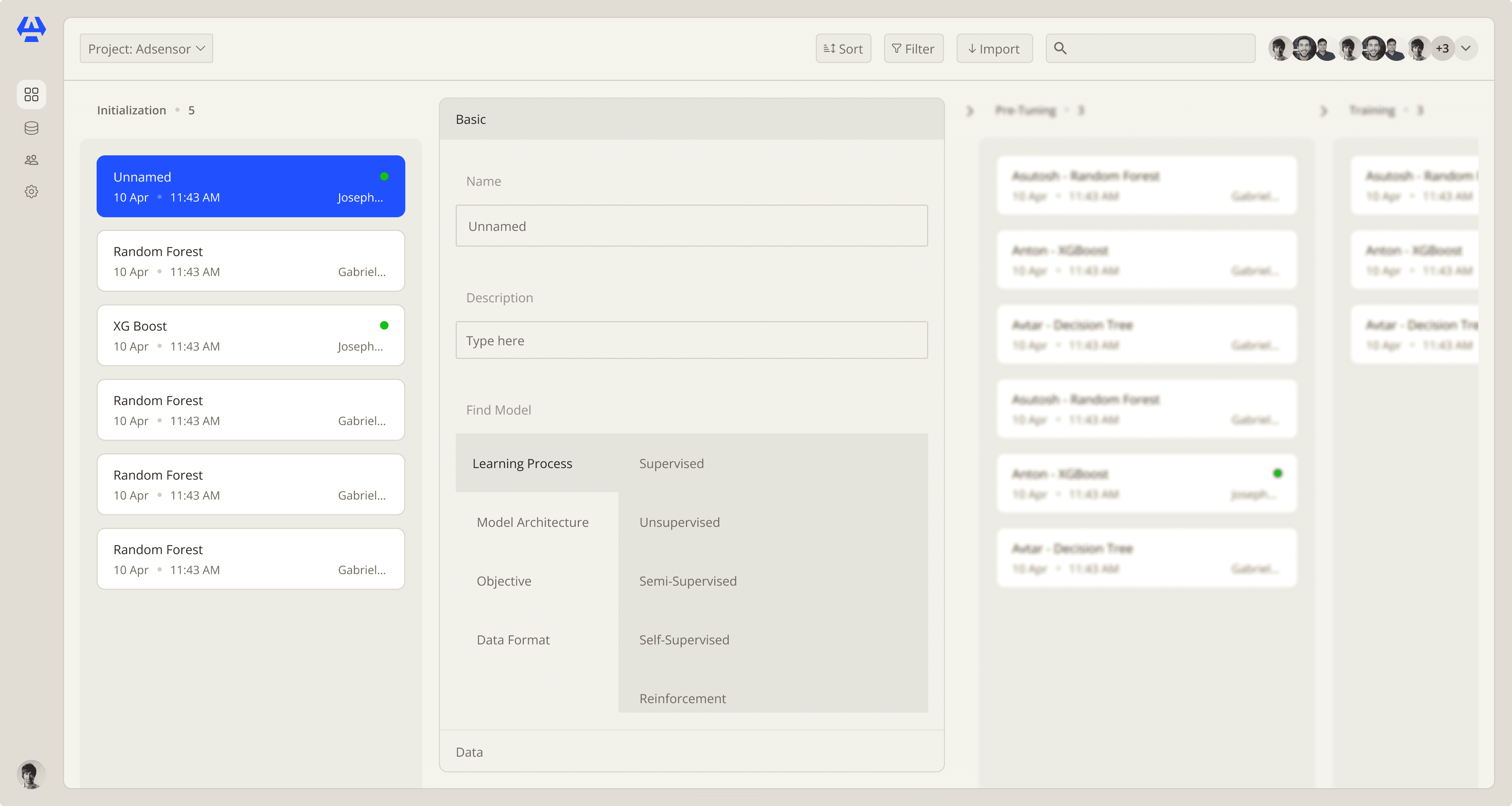
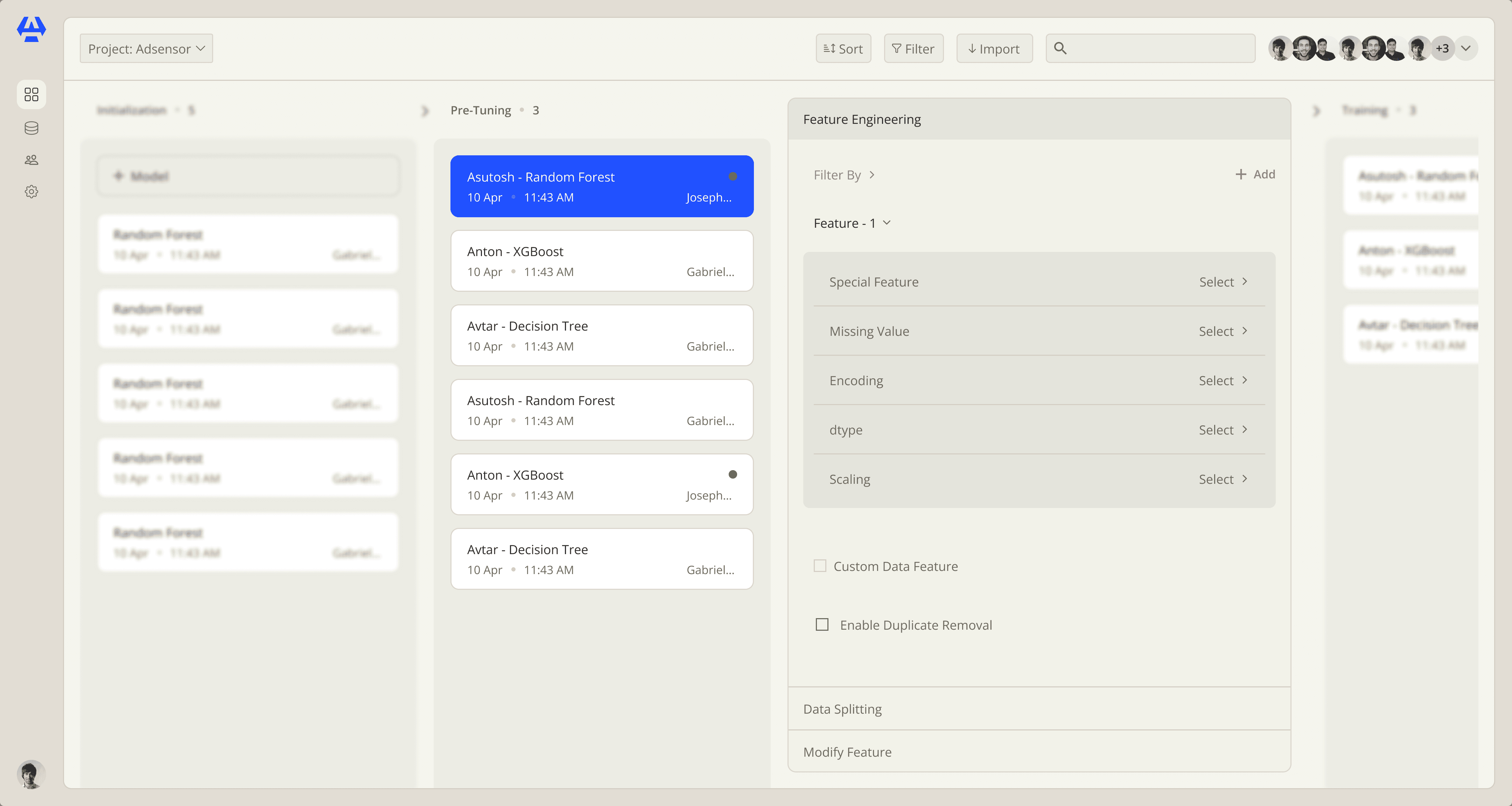
Progressive disclosure, guided experience and version transparency.
Progressive disclosure, guided experience and version transparency.
Drag and drop model cards through stages.
Drag and drop model cards through stages.
Can be easily traced back unlike in free canvas with lot of connections.
Can be easily traced back unlike in free canvas with lot of connections.
Swimlane -1
Swimlane -1
Swimlane -1

Swimlane -2
Swimlane -2
Swimlane -2

Swimlane -3
Swimlane -3
Swimlane -3

Free Canvas
Free Canvas
Free Canvas
Final Designs
Final Designs
Stage Based Visual Pipeline
Stage Based Visual Pipeline
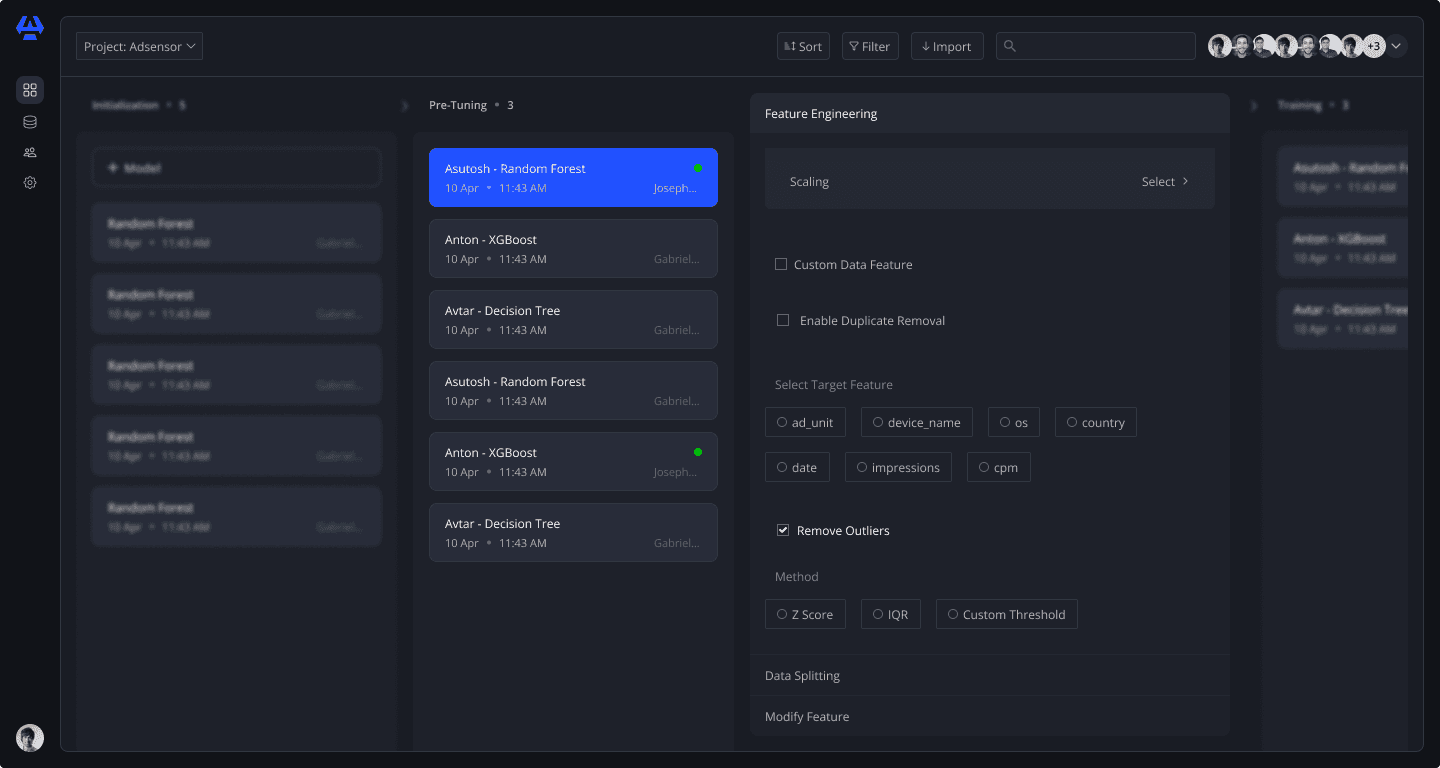
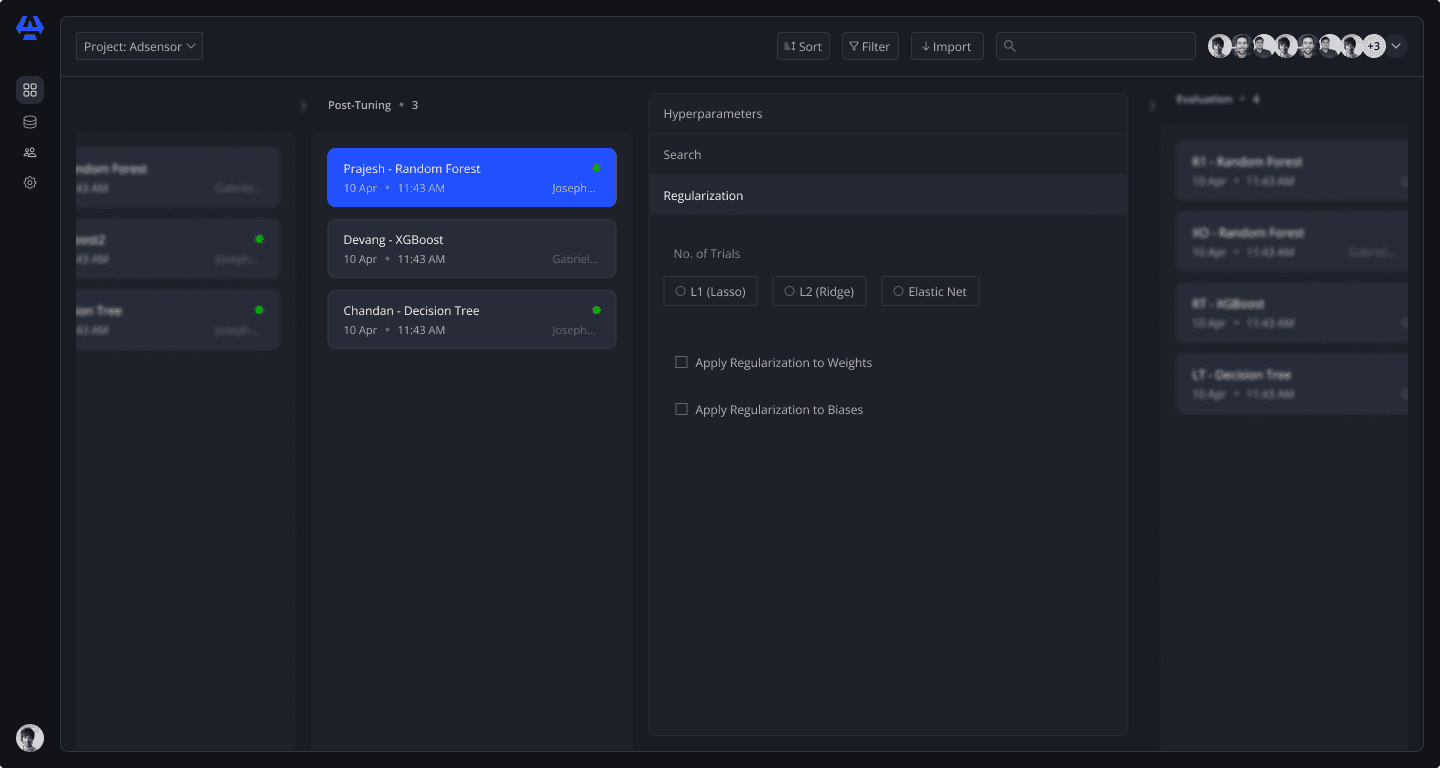
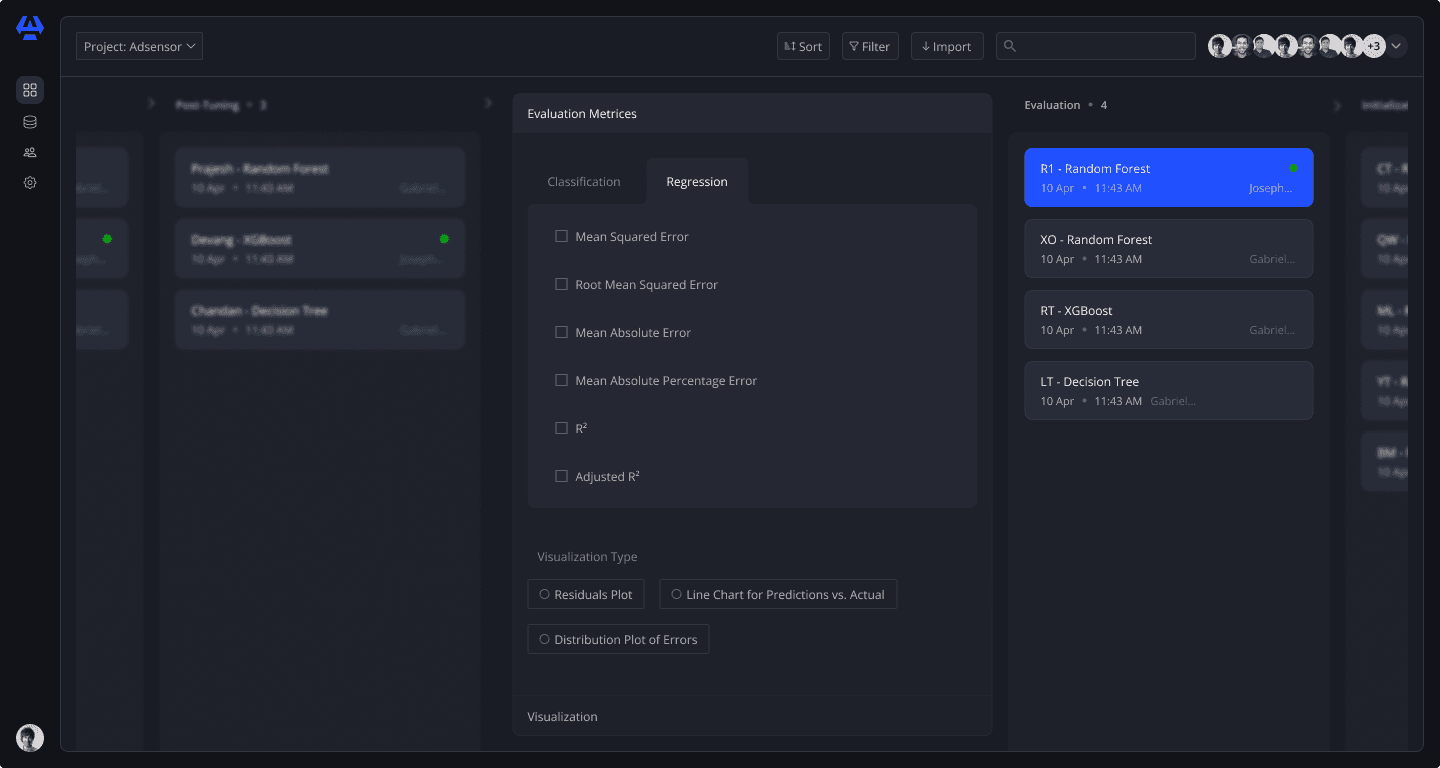
Progressive Disclosure
Progressive Disclosure
Progressive Disclosure
Progressive Disclosure
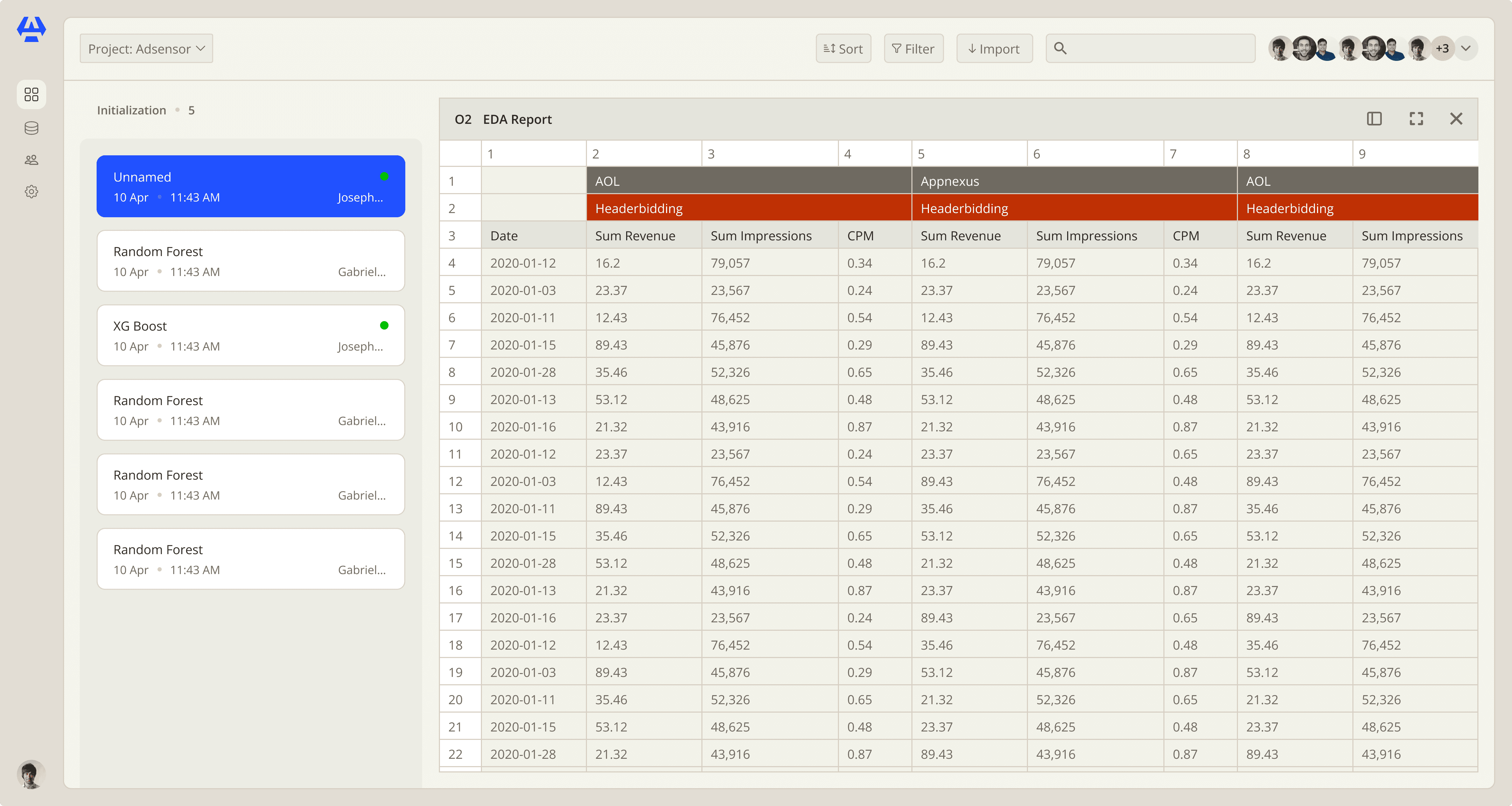
Viewing Data in the Application
Viewing Data in the Application
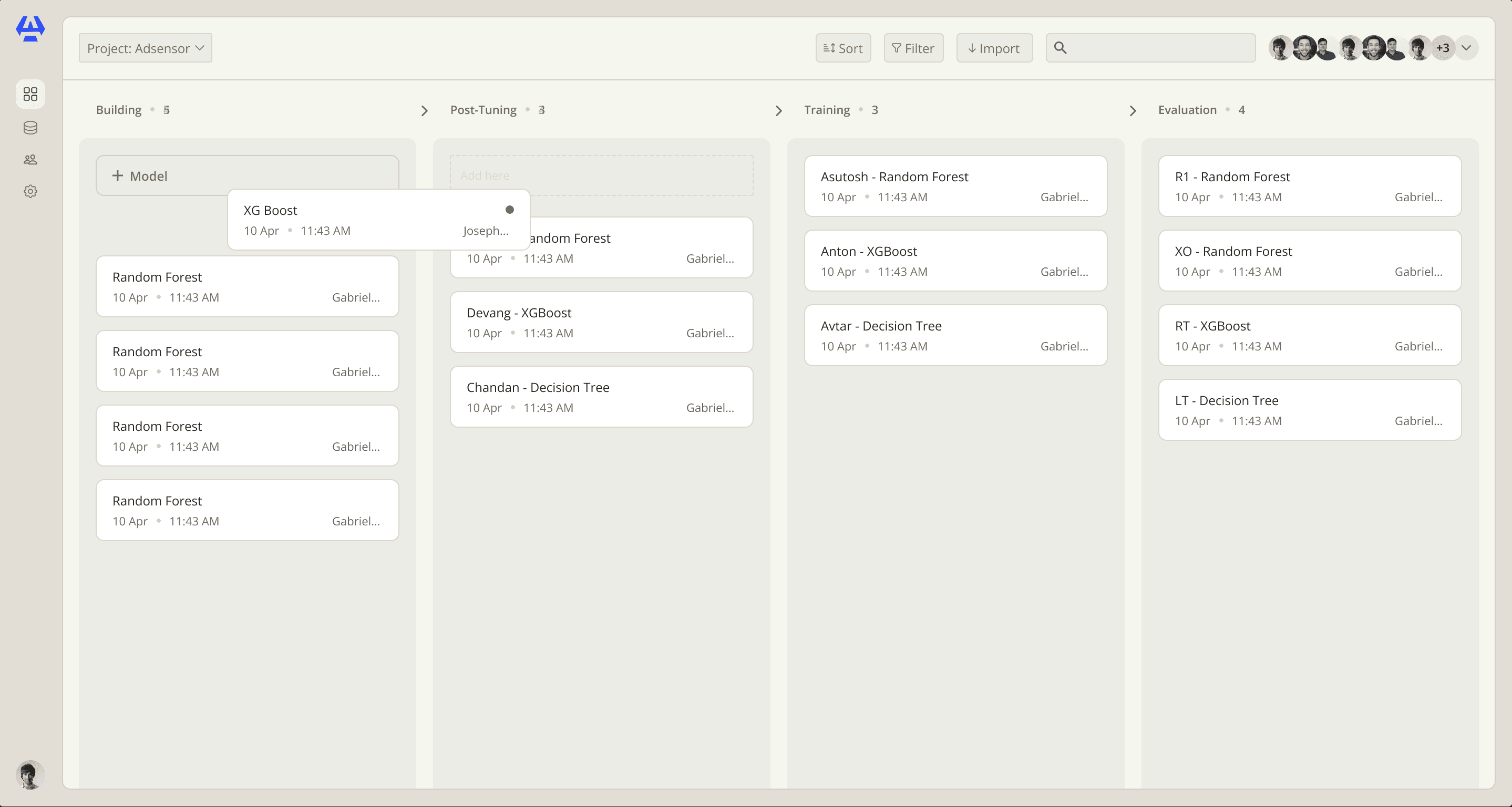
Drag and Drop Model Cards
Drag and Drop Model Cards
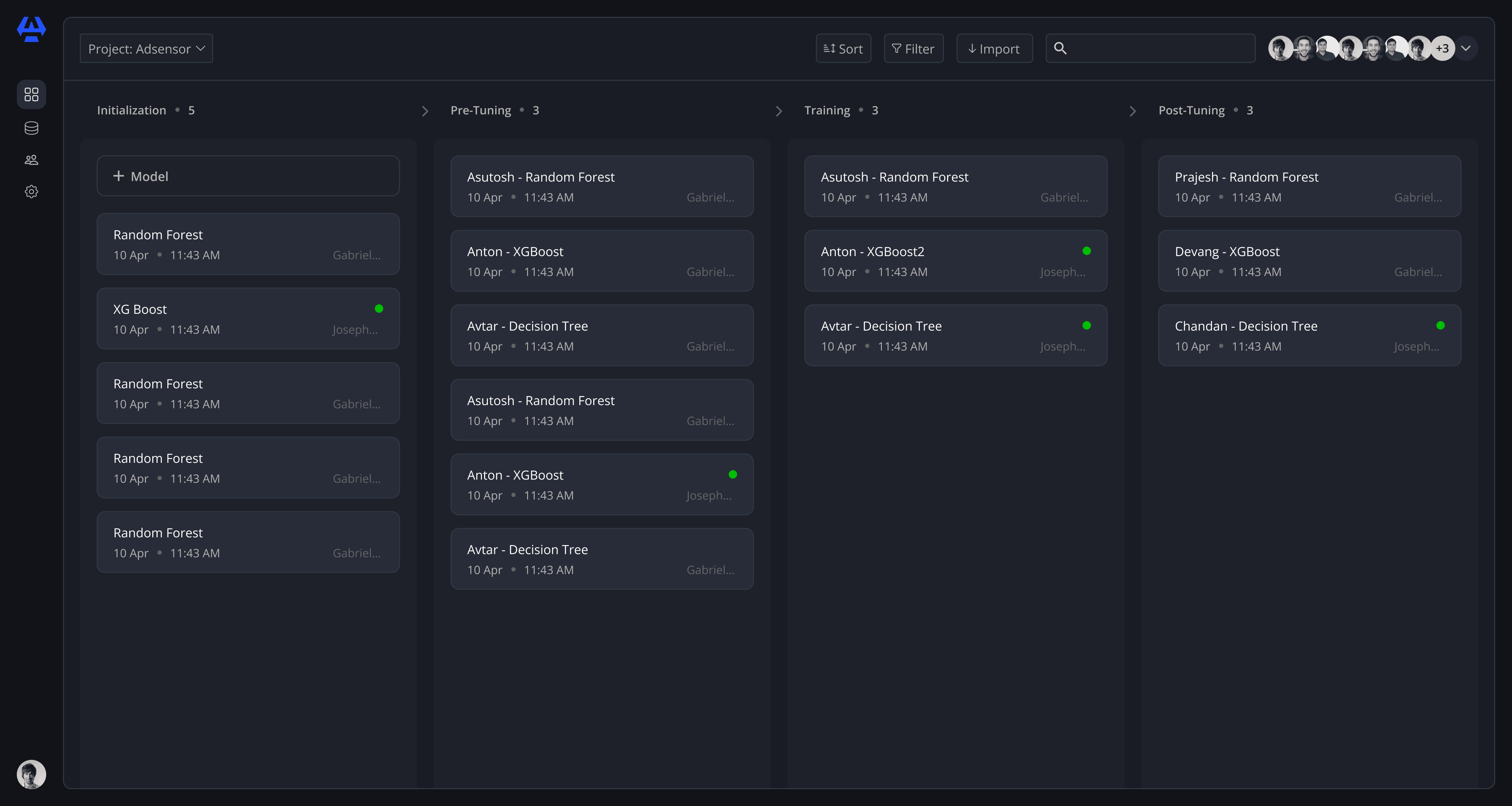
We also designed the dark mode.
We also designed the dark mode.
Learnings
Learnings
Learnings
Stage-based workflows reduce cognitive load because they match how teams naturally think: “what step are we in?”.
Progressive disclosure is essential for mixed-seniority teams—one UI can serve beginners and experts without overwhelming either.
Stage-based workflows reduce cognitive load because they match how teams naturally think: “what step are we in?”.
Progressive disclosure is essential for mixed-seniority teams—one UI can serve beginners and experts without overwhelming either.