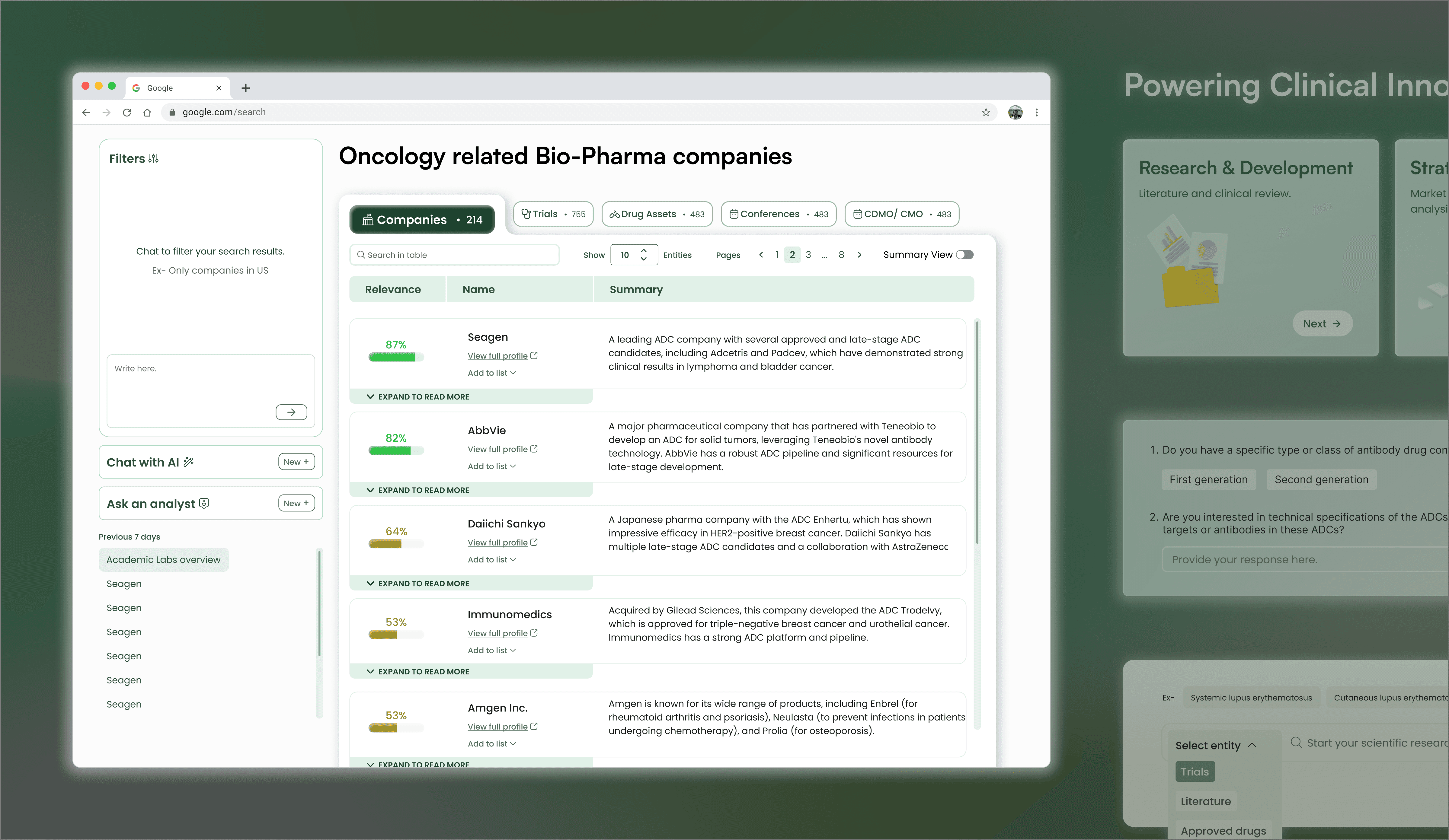
Bio‑pharma research is fragmented across sources, making it slow to track, compare, and stay updated across fast-moving domains.
Different users need different monitoring workflows, but existing tools don’t adapt well to role-specific goals or context.
Designed an “intelligence workflow” (collect, focus, ask, monitor) that turns messy research into repeatable, personalized actions.
Balanced trust + speed: structured source grounding, clear citations/traceability patterns, and configurable monitoring so outputs feel reliable and usable.
Low signal-to-noise: hard to filter what matters now for a specific therapeutic area, asset, or competitor.
Lack of continuity: research isn’t “saved as a living stream,” so users repeatedly redo the same investigation.
Trust gaps: AI outputs without clear sourcing/structure are hard to use in high-stakes decisions.
Users don’t just need answers—they need a system that keeps them continuously informed on what they care about, in their own structure.
So the product had to combine generative Q&A with persistent monitoring workflows (watchlists, topics, entities) to become daily-use intelligence.
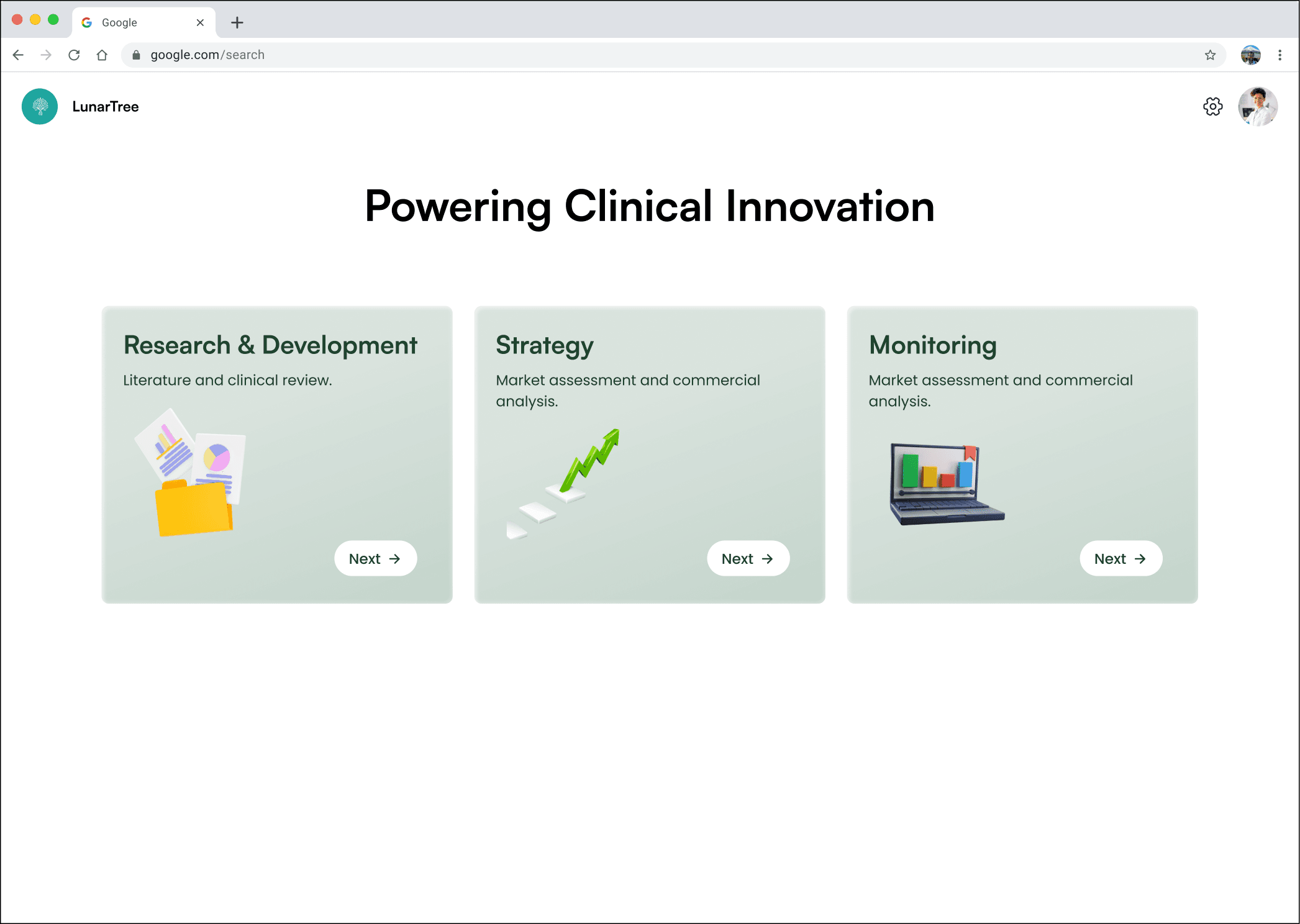
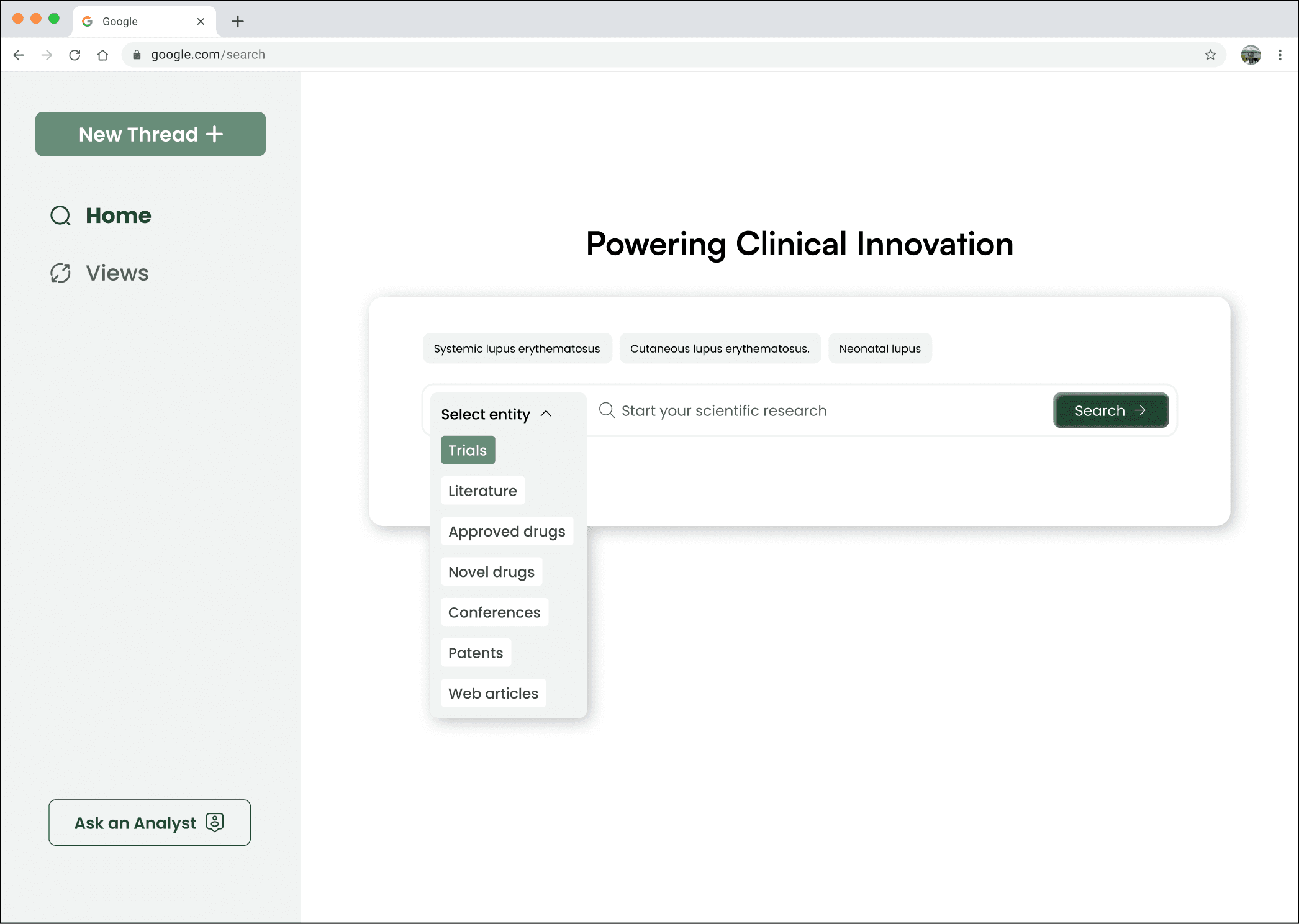
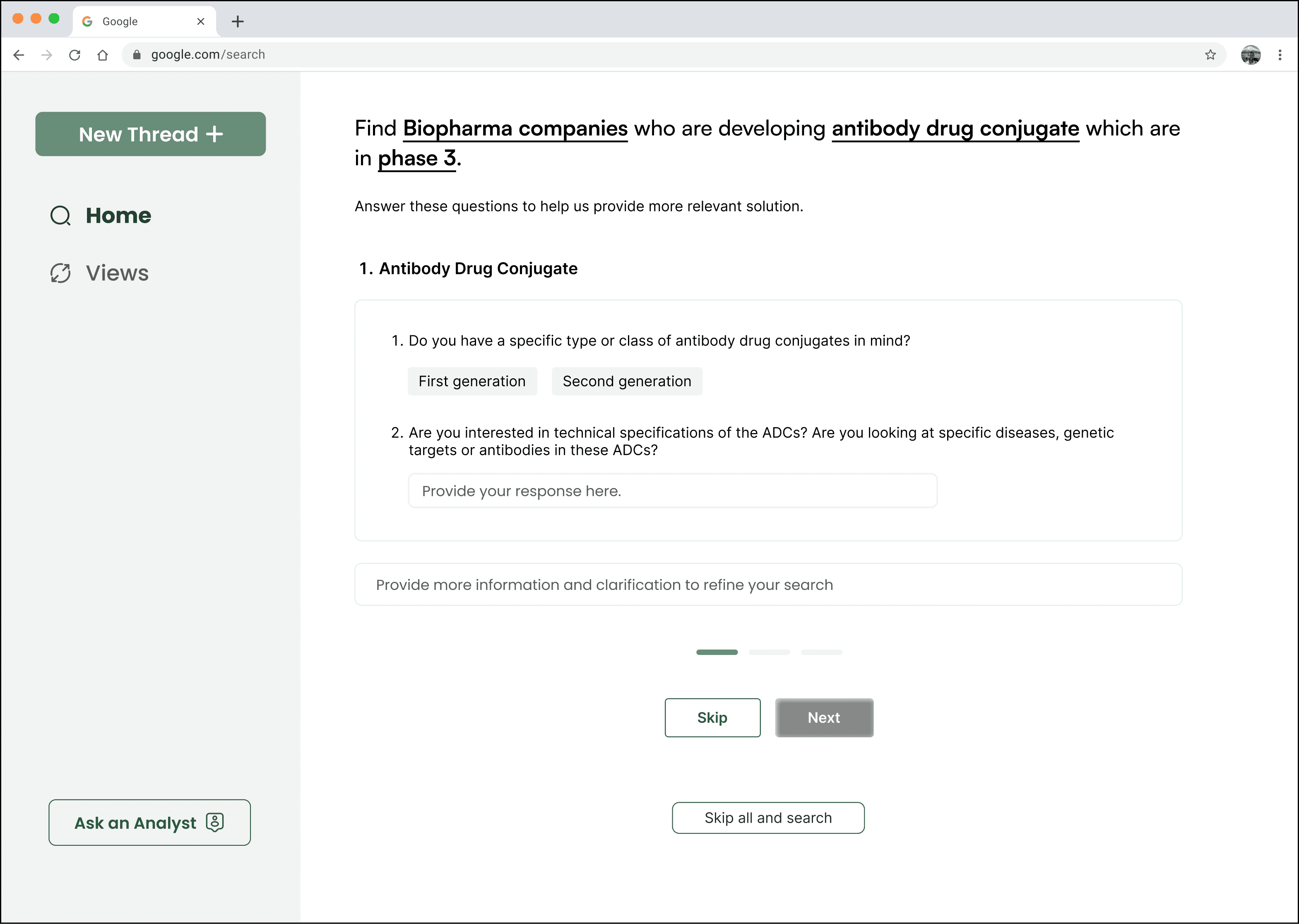
Enabling different types of search from home
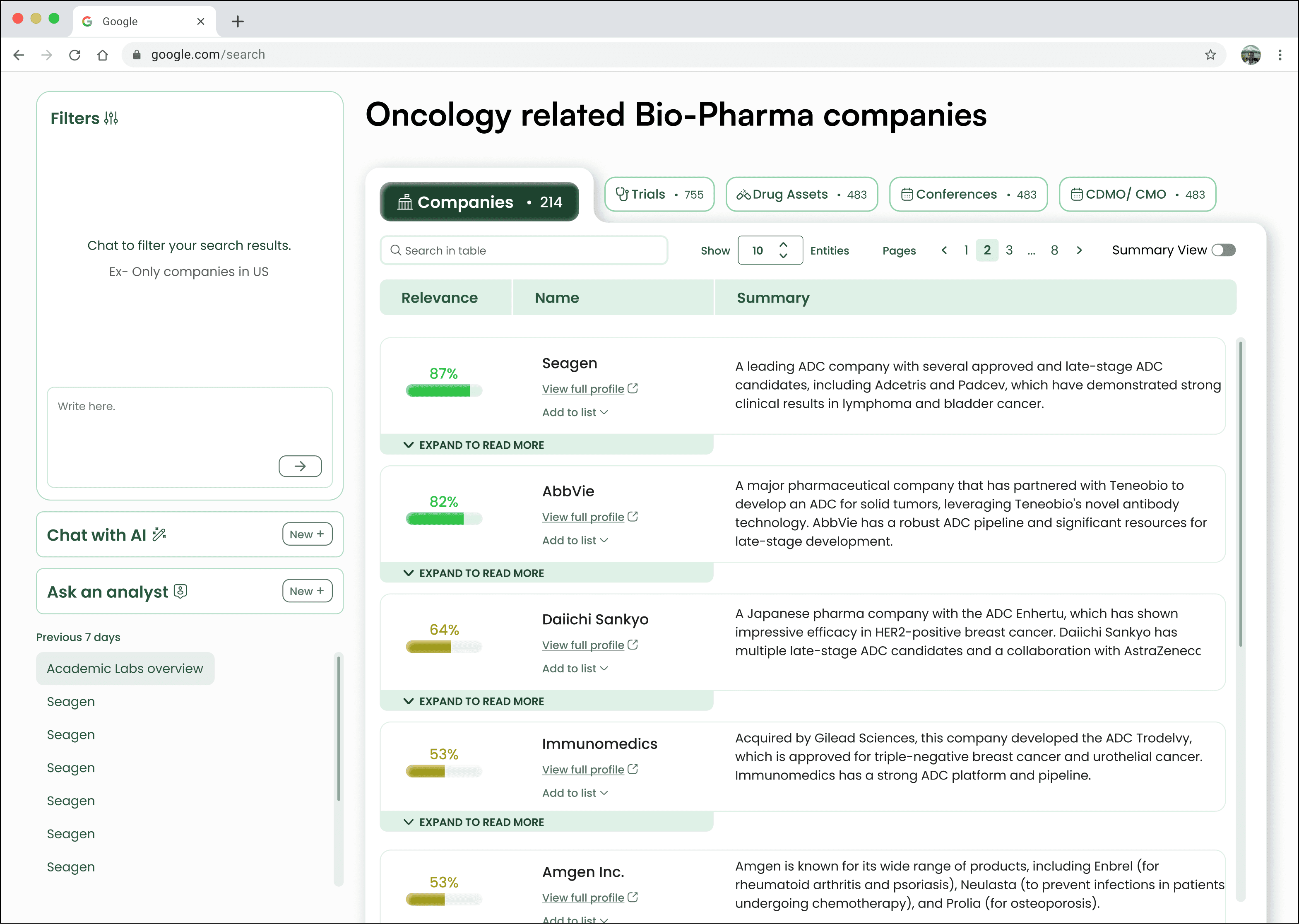
Dashboard featuring different tabs of information along with AI filters and history
Reduced research time by converting multi-source scanning into one workspace with AI-driven synthesis and monitoring.
Enabled diverse user workflows through personalization (role, domain, entities of interest) instead of one-size-fits-all dashboards.
Designing GenAI for regulated/high-stakes domains requires “confidence UX”: source traceability, clear scope, and controllable monitoring beat flashy generation.
0‑to‑1 success comes from nailing the repeatable loop (monitor, summarize, decide, share), not just the first-time “wow” query.