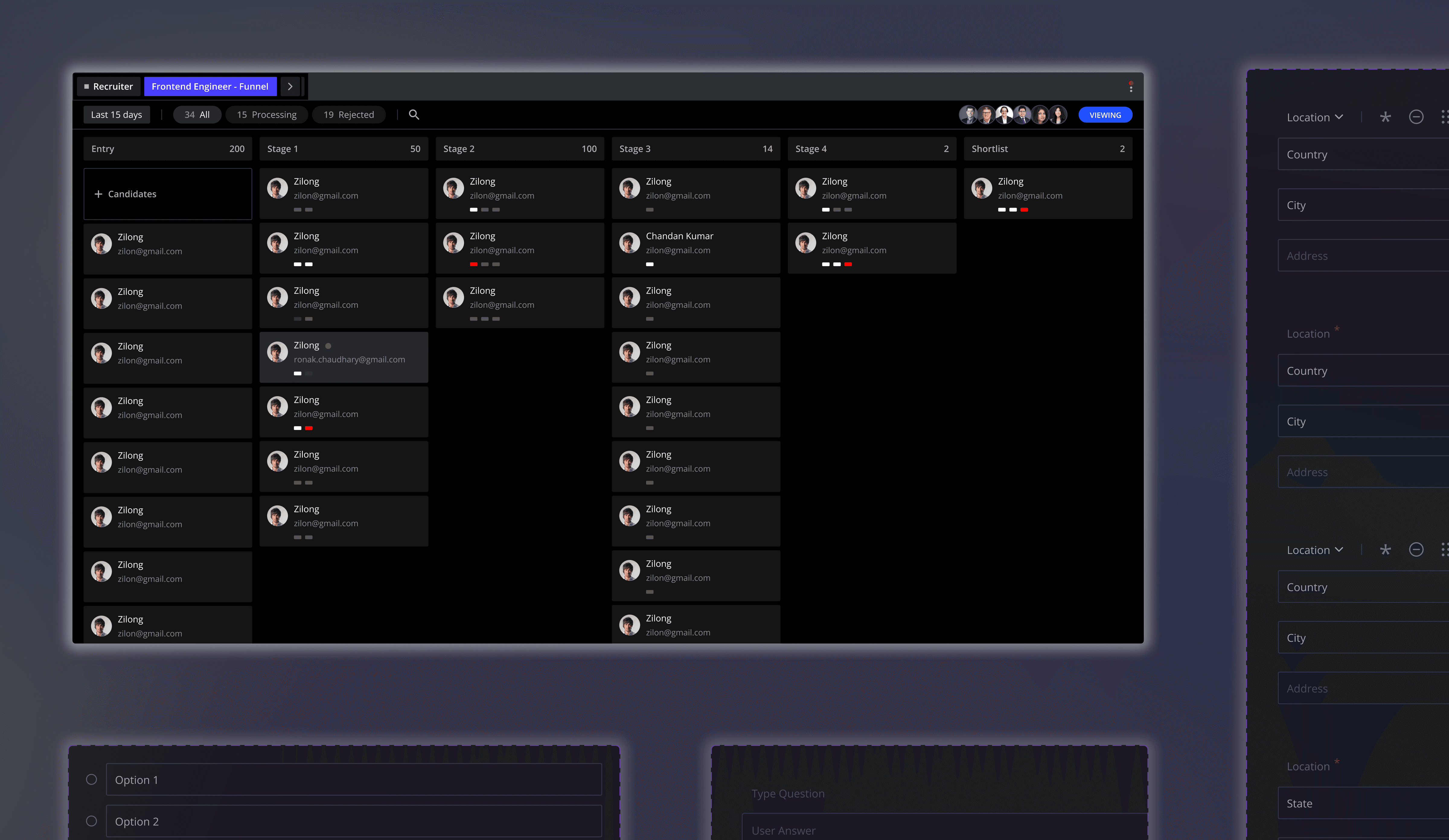
Hiring was slowed by scattered tools, poor pipeline visibility, and manual follow-ups—causing delays, missed handoffs, and inconsistent candidate communication.
Teams couldn’t reliably spot bottlenecks or track “where a candidate is” across multi-stage processes.
Candidates “disappearing” between stages; unclear ownership and handoff points.
Hiring managers had no self-serve visibility, creating constant status pings to HR.
Candidate communication was inconsistent (long silence periods, unclear next steps).
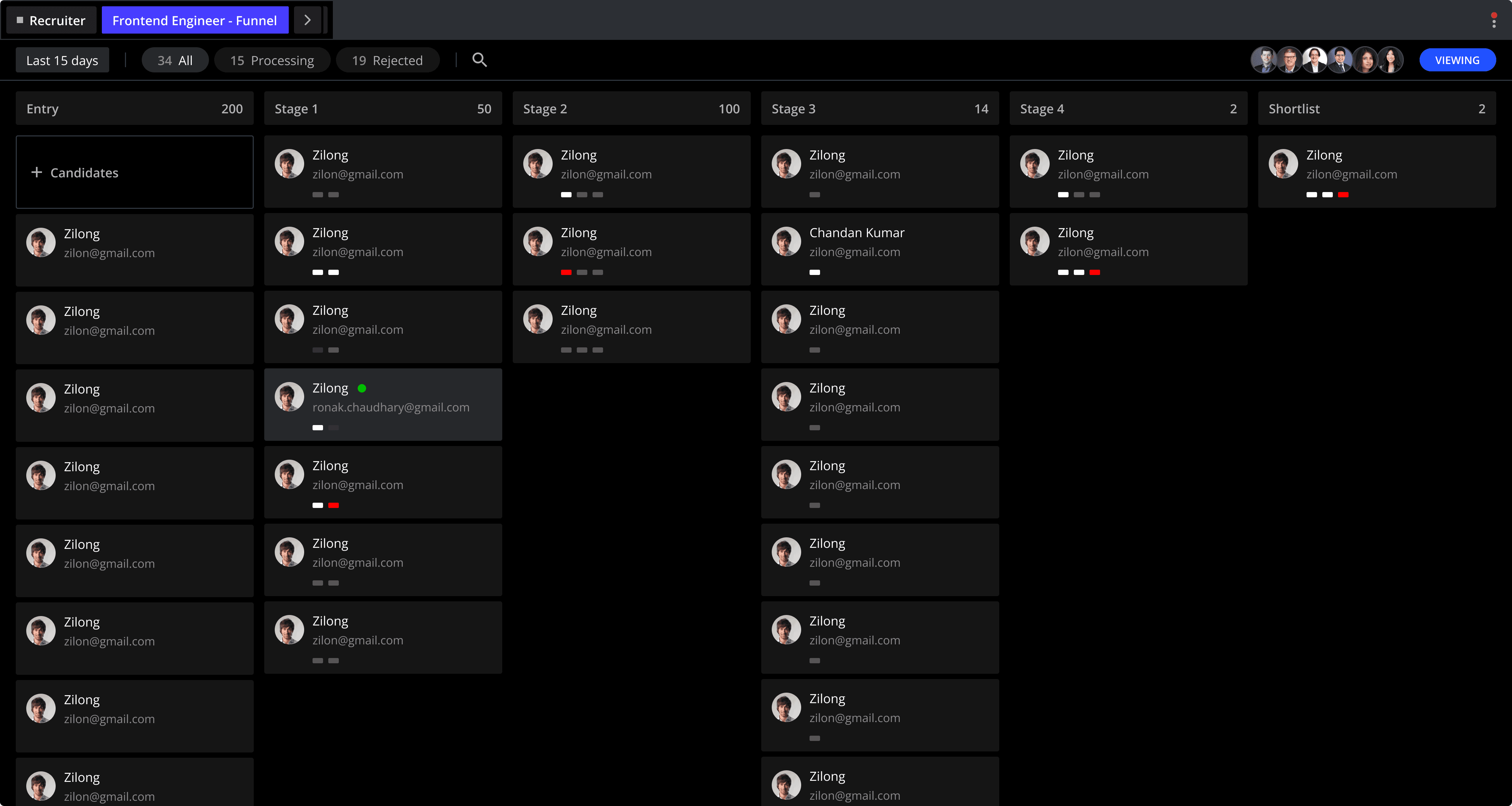
Recruiters naturally think in flow (who is in which stage, what’s blocked, what’s next), not in static lists—so the UI needed a pipeline-first mental model.
Visibility is a bottleneck-killer: when managers can see status themselves, recruiters regain time for actual recruiting work.
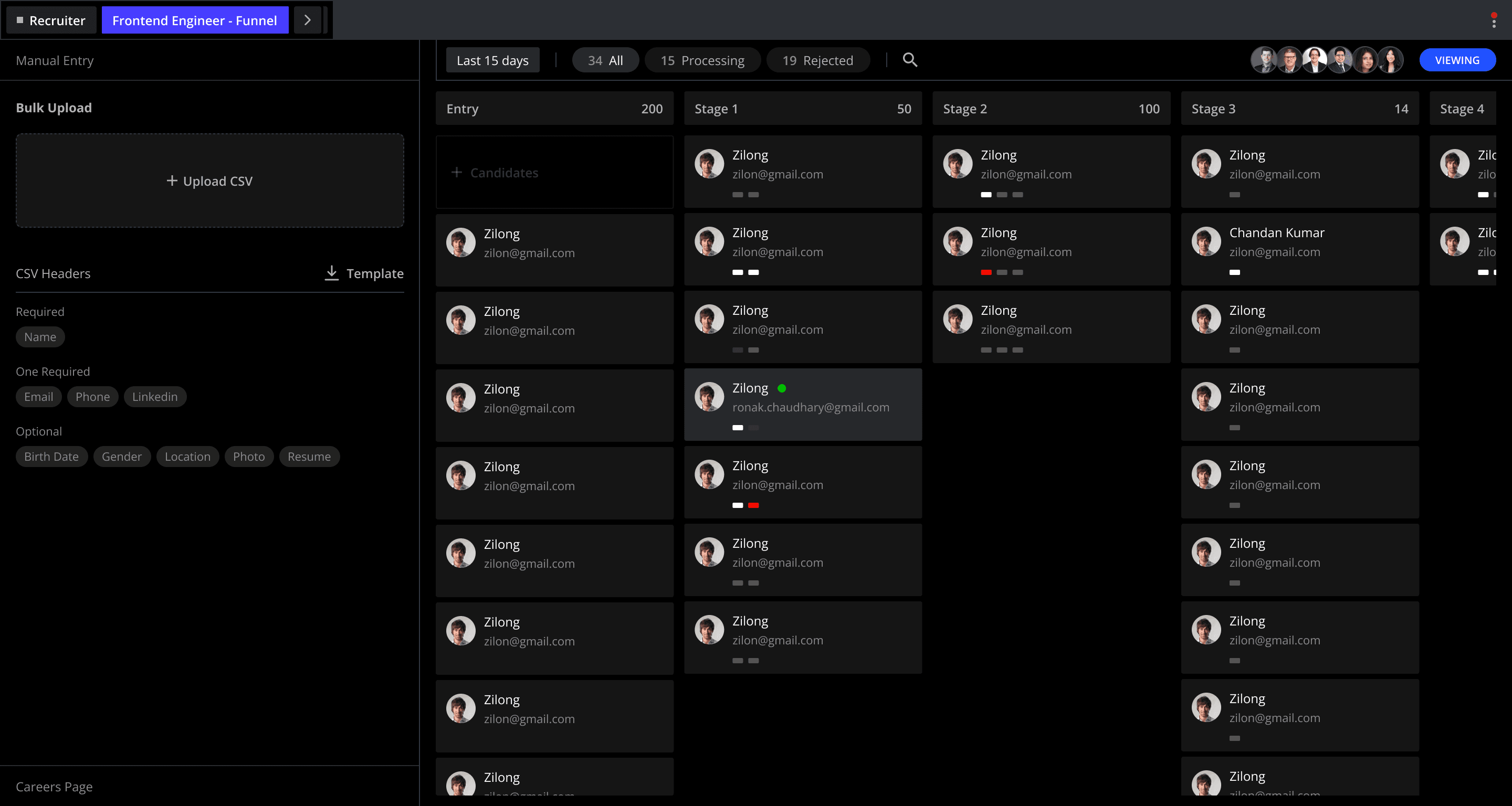
Adding candidates to funnel
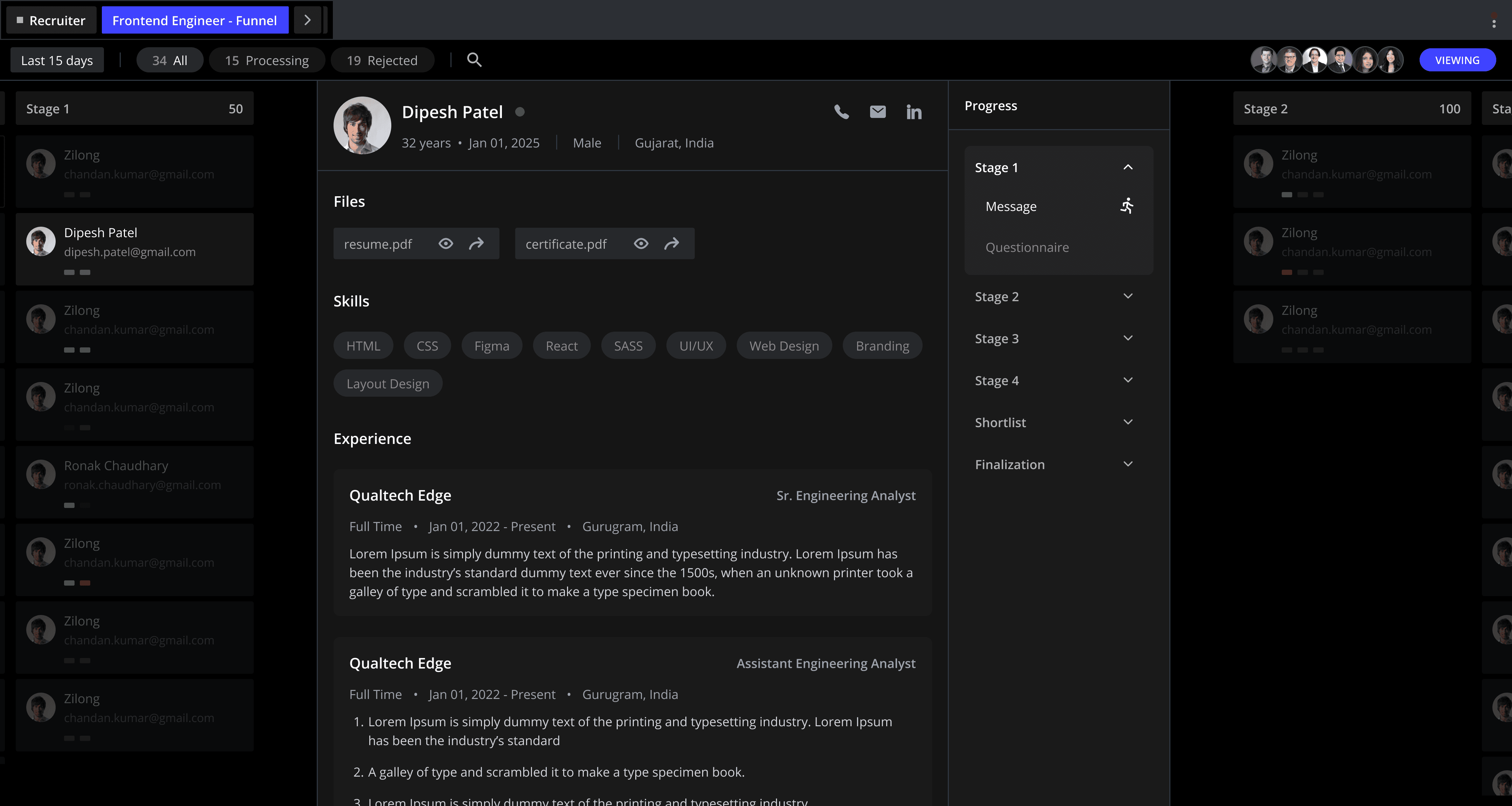
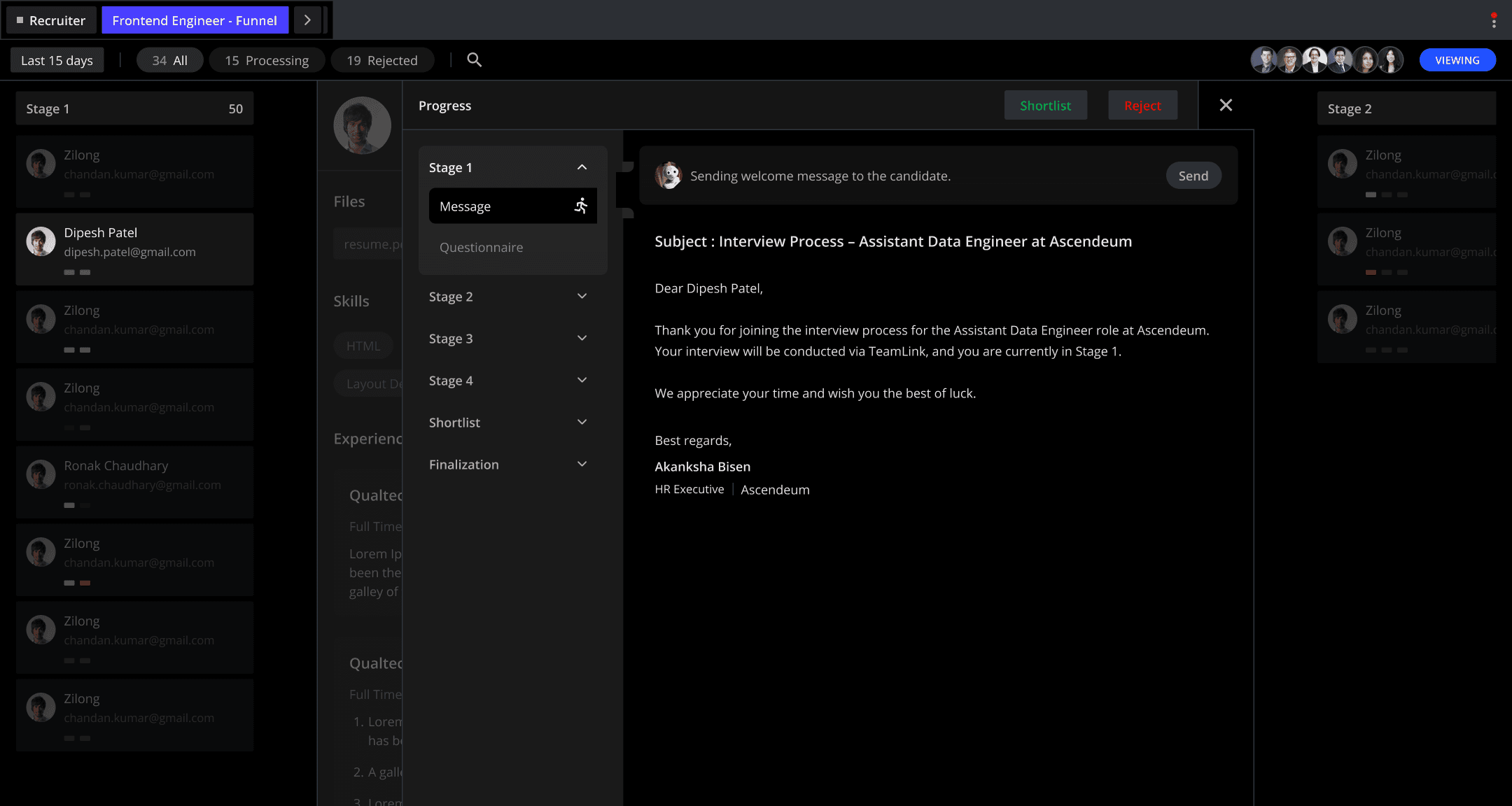
Details of Stages a Candidate goes through
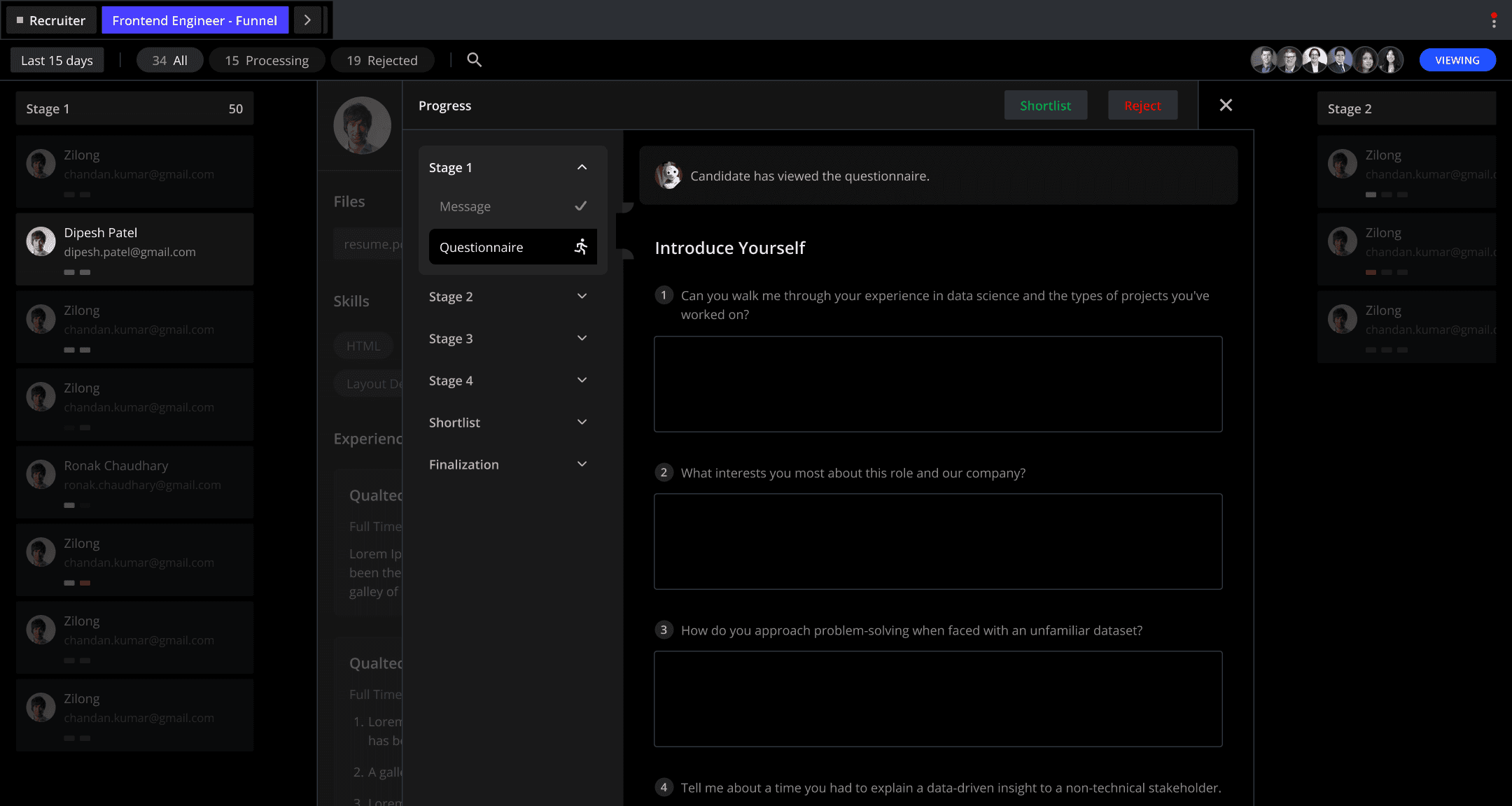
Recruiters can assess pipeline health “at a glance” and act proactively on bottlenecks.
Hiring managers spend less time chasing updates and more time interviewing/deciding.
Operational tools succeed when they reduce “coordination tax” (status checks, context switching, follow-ups), not just when they store data.
A strong information architecture (funnel ,stage, candidate) can outperform complex features in perceived usefulness.